
Throughout history, the message of Islam spread across vast lands through diverse means. In many regions, the ‘sword’ of conquest established political dominion, providing fertile ground for the faith to take root. Trade routes served as conduits, allowing merchants and travelers to introduce Islamic principles and foster cultural exchange. Beyond these, general da’wah the earnest invitation to Islam through preaching and teaching played a pivotal role, supported by robust theological and philosophical discourse. In places like the Sham (Syria, Lebanon, Palestine, Israel, Jordan, and Cyprus, as well as parts of Turkey) and the Western Islamic lands, Kalam (Islamic scholastic theology and philosophy) provided an intellectual backbone, enabling scholars to defend Islamic tenets against philosophical challenges and convince intellectuals through reasoned arguments. Countless books were authored, and their translation into various native languages significantly aided the spread of knowledge. Furthermore, the Prophet Muhammad’s ﷺ exemplary seerah (biography) and profound character instilled awe and drew people to him, his message, and ultimately to Allah. This foundational example was then followed by the exemplary character of Sufi saints and even general lay Muslims, all of whom attracted non-Muslims and demonstrated the beauty and truth of the faith.
However, the Indian subcontinent presented an entirely different order of challenge, a spiritual battleground unlike any other. While all the aforementioned methods of da’wah the character of Muslims, trade, and intellectual discourse were certainly present and important in India, they encountered an additional and deeply pervasive spiritual reality. Here, the challenge was not merely philosophical or political; it was fundamentally metaphysical. The intellectual arguments of Kalam, while providing crucial insights and an intellectual framework for scholars and certain converts, often held limited sway with the masses when confronted with the tangible, albeit illicit, manifestations of occult power and spirit possession. To truly penetrate and transform this unique spiritual landscape, a distinct and potent “antidote” was required, calibrated precisely to match the local “poison.”
Listen to the summary of this article here:

This antidote manifested profoundly through the karamat (miracles) of the awliya (saints) who journeyed to India. These divinely granted extraordinary occurrences often defied natural laws and directly countered the prevailing forces of witchcraft, sorcery (Jadu), and various forms of spirit worship, which operated on an extraordinary level in this land. The encounter between Khwaja Moinuddin Chishti رَحِمَهُ اللَّهُ and the formidable sorcerer Jaypal stands as a prime historical illustration of this direct spiritual confrontation. This article will delve into the Islamic understanding of magic and jinn, explore the specific, enduring manifestations of occultism and spirit worship in India, highlight how the karamat of the awliya served as the Divine response, analyze the complex issue of grave veneration, and ultimately argue for the urgent and unique need for authentic da’wah in India today.
The Poison: Islamic Theology of Magic (Sihr) and the Unseen World of Jinn
Islam’s theological stance on magic, or sihr, is unequivocal: it is explicitly forbidden and considered a major sin, often bordering on kufr (disbelief) due to its inherent reliance on entities other than Allah, thus compromising tawhid (the absolute Oneness of God). While prohibited, the Quran and Sunnah acknowledge that sihr can, by Allah’s permission, have real effects, distinguishing it from mere illusion. The Quran itself speaks of this in Surah Al-Baqarah (2:102), mentioning how people ,
“learned from them that by which they cause separation between a man and his wife.”
Its condemnation is also evident in verses like Surah Yunus (10:77–82) and Surah Taha (20:69), which assert the futility of magic against the truth of Allah. Much of what is understood as magic in Islamic tradition involves cooperation with jinn through forbidden means, such as invoking them or offering sacrifices.
Central to understanding the unique spiritual dynamics of India, and indeed many forms of occult practices, is the Islamic concept of the Jinn. These are not mythical beings, as often perceived in the West, but a distinct creation of Allah, explicitly mentioned in the Quran and Sunnah. Jinns are created from smokeless fire (mārij min nār), a subtle energy distinct from the earth from which humans are made. They possess an ethereal body, generally invisible to the human eye, which grants some of them the power to shift shapes and take any form at will. They are also known for their generally long lifespans. Like humans, they are sentient beings with free will, meaning they can be believers (Muslim jinn) or disbelievers (kāfirūn), the latter often termed Shayāţīn (devils). Just as among humans, jinn can be pious or corrupt, righteous or immoral, and even adhere to different sects.
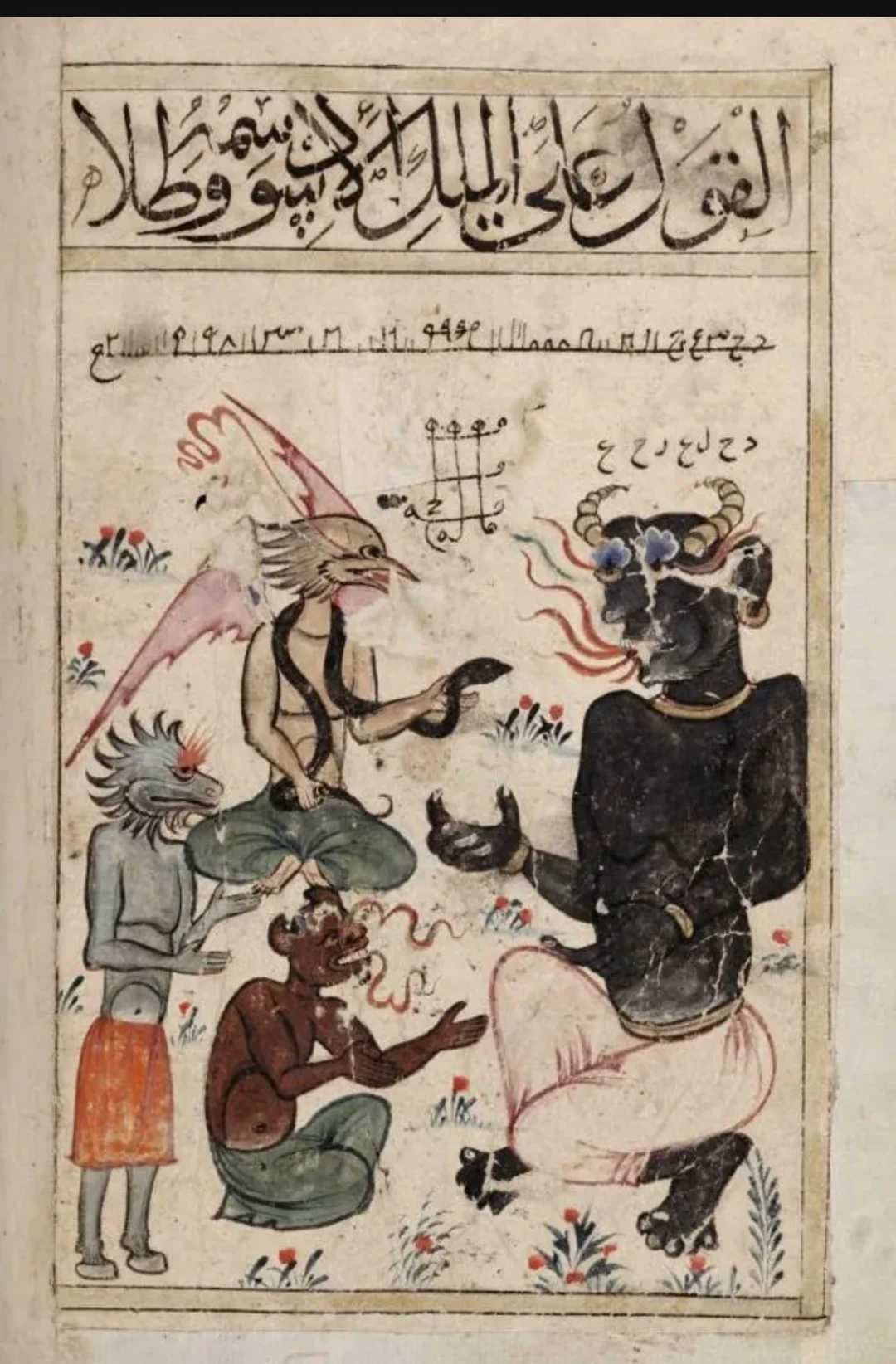
It is a fundamental aspect of Islamic belief to affirm the existence of jinn. The Quran explicitly states their creation, as in Surah Ar-Rahman (55:15):
“And He created the jinn from a smokeless flame of fire.”
Like humans, jinn were created for the sole purpose of worshipping Allah, as declared in Surah Adh-Dhariyat (51:56):
“And I did not create the jinn and mankind except to worship Me.”
To deny their existence, or to rationalize them as mere metaphors for ‘evil that exists in humans,’ is considered kufr by mainstream Islamic theology. This denial is often associated with naturalist or rationalist schools of thought that argue that something created from fire should be visible. However, modern scientific understanding debunks this rationalization: just as we acknowledge the existence of invisible flames (like methanol fire), micro-organisms, various forms of radiation, and sub-atomic particles — none of which are perceptible by human senses — the invisibility of jinn does not negate their reality. Our inability to perceive something does not equate to its non-existence.
To further understand the spiritual landscape where karamat operated, it’s essential to grasp the Islamic classification of events that defy ordinary natural laws. Not all extraordinary occurrences are the same, and their source and purpose determine their classification:
Muĥāl Shara’ī: That which Revelation declares impossible (e.g., A Prophet committing a sin).
Muĥāl ‘Aqlī: That which intellect deems impossible (e.g., something existing and not existing at the same time).
Muĥāl ‘Ādī: That which is known to be impossible by common observation and natural laws established by the Creator. For instance, a human cannot fly unaided, or a dead person cannot spontaneously return to life.
It is within this third category — muĥāl ‘ādī — that both prophetic miracles (mu’jizat) and the miracles of saints (karamat) occur. These are not violations of rational or scriptural impossibilities, but rather extraordinary exceptions to the established natural laws, granted by Allah to validate a prophet’s claim or to honor a pious saint.
Beyond these, other extraordinary events include:
Irḥāṣ: Events that occur at the hands of Prophets prior to their formal advent or announcement of prophethood, serving as preparatory signs.
Ma’ūnah: Extraordinary things that happen upon the command, wish, or prayer of common, righteous Muslims, serving as spontaneous divine aids.
Istidrāj: Crucially, if an extraordinary thing occurs upon the claim of disbelievers, evil people, brazen sinners, or tyrants, it is termed Istidrāj. This is a deceptive ‘miracle,’ where Allah grants an evil person’s wish or allows an extraordinary feat to occur, not out of favor, but as a means of leading them further astray, increasing their pride, and ultimately paving the way for their downfall. This is often the category under which the feats of sorcerers and black magicians fall.
Ihānah: Conversely, if things happen contrary to their (disbelievers’, evil people’s) claim, which humiliates them, such happenings are known as Ihānah. This is a direct act of divine humiliation and retribution against those who oppose Allah or His beloved ones.
The Enduring Presence of Occultism and Spirit Beliefs in India
The deep roots of occult practices and belief in supernatural forces persist in various forms across India, underscoring the enduring relevance of the spiritual battleground. In India, indigenous belief systems often involved the veneration of spirits, nature deities, and ancestors. From an Islamic perspective, many of these entities with whom humans sought to interact through occult rituals, sacrifices, or magic (Jadu) were, in fact, these disbelieving jinn.
A stark example of the continuing presence of intense occult practices is Mayong, a village in Assam, widely known as India’s “Black Magic Capital.” For centuries, Mayong has been associated with a living tradition of tantric and occult practices, with persistent local legends of sorcerers performing feats like shape-shifting, causing people to vanish, and wielding other ‘supernatural powers.’ These contemporary claims, from an Islamic standpoint, point to the continued reliance on forbidden knowledge, likely facilitated by the manipulation of evil jinn, echoing the istidrāj observed in historical accounts.
The belief in curses and the tangible impact of spiritual pronouncements is another facet of this unique landscape. The abandoned village of Kuldhara in Rajasthan stands as a chilling testament to this. Legend holds that in 1825, its entire population mysteriously vanished overnight, leaving behind a powerful curse that no one should ever inhabit the land again. To this day, Kuldhara remains deserted, with persistent local claims of supernatural disturbances for anyone attempting to stay overnight. This deeply ingrained cultural narrative underscores the widespread belief in the enduring power of such ancient spiritual pronouncements. Similarly, Bhangarh Fort in Rajasthan is reputed as one of India’s most haunted locations due to a tantric priest’s curse. The legend states that a black magic practitioner, spurned by a princess, cursed the entire village to destruction and eternal desolation. The enduring belief in this curse’s power is so strong that the Archaeological Survey of India prohibits visitors after sunset due to persistent reports of supernatural activity.
Beyond direct sorcery, the spiritual intensity of the land is also manifested in pervasive spirit possession, divine channeling, and ritualistic healing. From an Islamic theological standpoint, many of the ‘spirits’ or ‘deities’ believed to manifest through human mediums, or to cause illness, are in essence, jinn. The reliance on such entities for guidance or cure, regardless of their perceived intent, constitutes a departure from pure Tawhid.
A vivid example of ‘divine channeling’ can be observed in the Melmaruvathur Adhiparasakthi movement in Tamil Nadu. Here, Bangaru Adigalar, from the 1970s, has been believed to channel the goddess Mariamman during trances. During these states, he reportedly diagnoses illnesses, predicts futures, and offers spiritual guidance, with devotees attributing ‘miraculous recoveries’ — such as a woman cured of paralysis after a prescribed ritual bath — to his intercessions. Similarly, the annual Mariamman festivals involve devotees entering trance states, believed to be the goddess’s manifestation, to perform acts of endurance (like fire-walking or carrying kavadi) in pursuit of healing from ailments like smallpox or infertility. Such instances, where unseen entities are believed to possess individuals and offer what appear to be solutions, may be interpreted as istidrāj — a deceptive ‘miracle’ granted by Shayatin or disbelieving jinn to mislead people into shirk, diverting them from seeking help solely from Allah.
The belief in spirit possession (bhūtavidyā) is so deeply woven into the fabric of Indian society that it has been traditionally classified as a medical condition within ancient Ayurvedic texts. Practitioners diagnose possession by symptoms like erratic speech or unnatural strength and prescribe treatments involving herbal remedies, mantras, and specific rituals (such as chanting verses from the Atharva Veda) aimed at expelling the ‘invading spirit.’ This integration of spiritual and somatic healing reflects a holistic worldview where disease and ‘demonic influence’ are intrinsically linked, necessitating treatments that involve invoking or appeasing various spiritual entities.
In rural Tamil Nadu, the vulnerability of newlywed women to pey (malevolent spirits), manifesting as sudden illness or erratic behavior, illustrates how beliefs in jinn permeate social life. Exorcisms involve samiyadi rituals, where the possessed woman dances violently to drumbeats until the spirit reveals its demands — frequently a neglected shrine or unfulfilled vow. This highlights how traditional beliefs about spirits are intertwined with social anxieties and community harmony. Rajasthani traditions further categorize spirits into benevolent (sati) and malevolent (jinn) entities, each requiring distinct approaches. While a ghorala (possessed individual) channeling a sati spirit might mediate disputes or bless crops, one afflicted by a jinn requires intense exorcism, sometimes involving firewalking or animal sacrifice. Interestingly, the belief adapts to modern anxieties, with the ‘spirits of foreign tourists’ sometimes invoked to explain contemporary ailments.

The influence of jinn-like entities in India extends beyond mere fear or malevolence, often intersecting with social structures and identity. In coastal Karnataka and Kerala, the Bhoota Kola ritual provides a striking example of this complexity. Here, members of lower-caste communities, like the Pambada and Parava, don elaborate costumes to embody bhootas — spirits of ancestors or folk heroes. The performer enters a trance state, believed to be the channeling of the bhoota, to deliver judgments, resolve disputes, or bless harvests. A particularly profound aspect of Bhoota Kola is its temporary inversion of caste norms: during the ritual, upper-caste devotees prostrate before the possessed performer, whose spiritual authority temporarily supersedes earthly social divisions. From an Islamic perspective, these bhootas are categories of jinn, and while the ritual offers a social equalizer, the veneration and channeling of these entities remain an act of shirk.
The revolution and the religion in the film Kantara
The deep-seated cultural reverence for spirit possession and jinn-related phenomena in India was starkly highlighted by the phenomenal success of the 2022 film Kantara. The movie, centered around the Bhoota Kola ritual and the invocation of ancestral spirits, resonated profoundly across the country, attracting audiences from all strata of society — from political leaders to urban professionals. The widespread acclaim and emotional connection demonstrated by millions of Hindus, despite their varied backgrounds, illustrate a pervasive cultural awe and belief in the reality and power of jinn-like entities and spiritual possession. This mass cultural engagement is further exemplified by the Jatra scene in the recently released Pushpa 2 film, which garnered immense popular enjoyment and critical praise for the actor’s portrayal, showcasing the pervasive cultural fascination with such ritualistic trance states and their perceived spiritual origins.
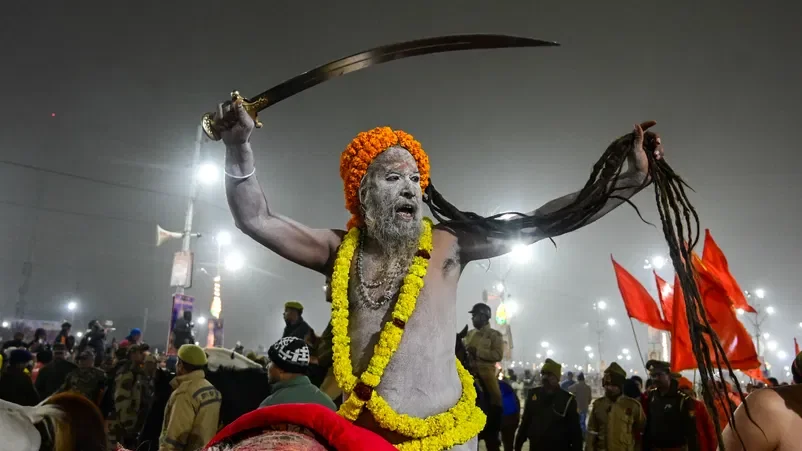
Similarly, the widespread fascination with Naga Sadhus, particularly among young Hindus, points to a romanticization of extreme asceticism and spiritual power, often linked to the invocation of various deities or spirits. These reclusive, ash-smeared ascetics, who engage in rigorous practices, are sometimes perceived as a ‘cool gang,’ further illustrating a pervasive cultural inclination towards awe and reverence for such phenomena. These cinematic depictions and public celebrations often mirror real-life occurrences, especially in South India, where Hindus hold yearly gatherings in their temples, taking out processions of their deities. During these events, many participants enter trance states, acting erratically and contrary to their real character, performing acts like walking on hot charcoal or dancing with unusual vigor. While some instances may be attributed to psychological persuasion or performance, others, from an Islamic perspective, strongly suggest genuine influence by jinn, manifesting in ways that defy normal human behavior. This collectively demonstrates that Indians, across demographics and even the diverse spectrum of Hindu beliefs — where some may worship Rama, others Krishna or Vishnu, and some even figures like Ravana, with varying interpretations of epics like the Ramayana — hold a clear fascination or awe towards any activity perceived as jinn-influenced. It is deeply ingrained in Indian society, and people proudly accept and celebrate it as part of their tradition, transcending their differences in theological and devotional practices.
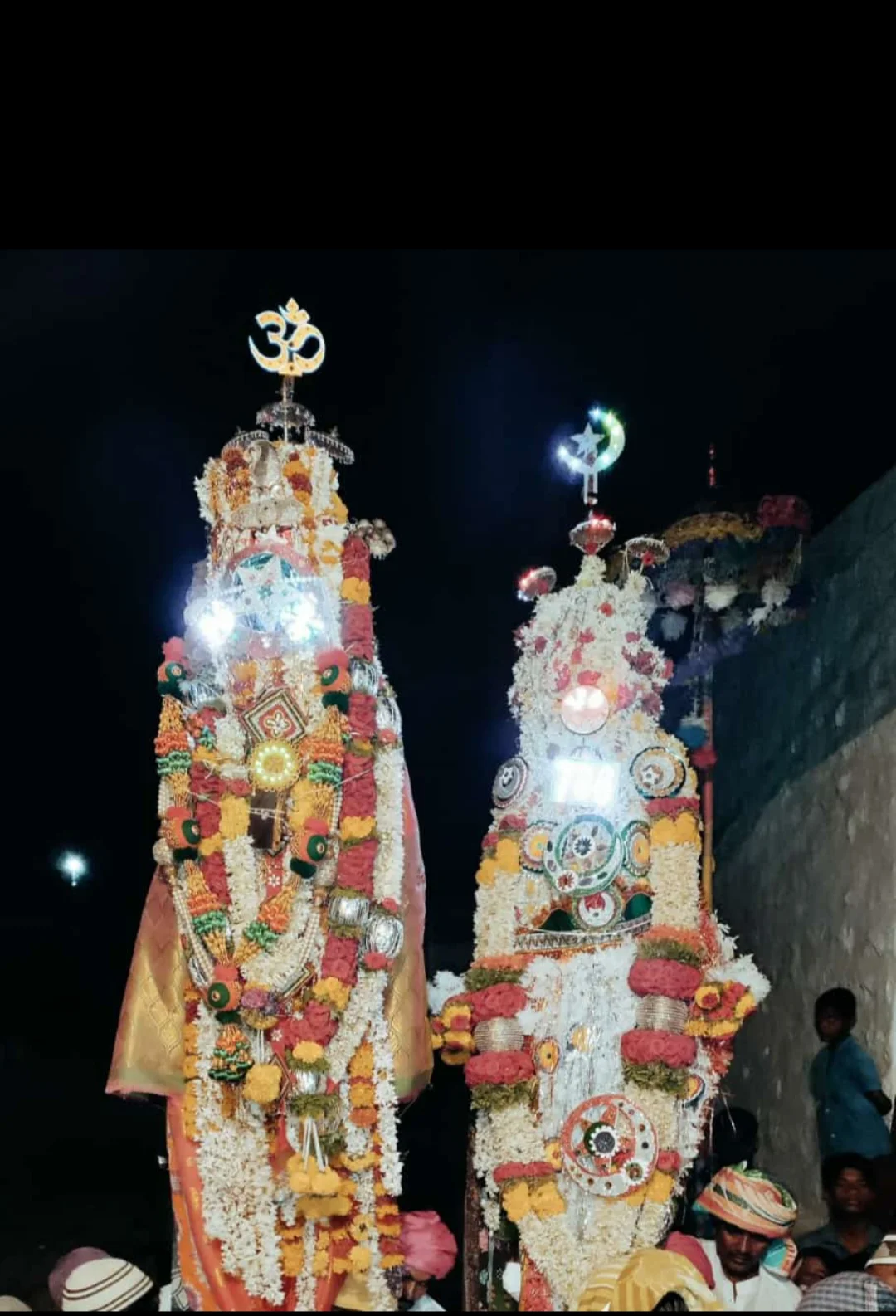
While the primary manifestations of occultism and spirit worship are rooted in indigenous pagan traditions, the pervasive influence of jinn and possession beliefs has, unfortunately, also seeped into certain Muslim communities in the subcontinent, particularly from the Shia tradition. A striking example of this syncretism is observed during Muharram, where, despite the profound importance of the 9th and 10th days commemorating the martyrdom of Imam Hussain رضي الله عنه, certain practices have emerged that intersect with jinn possession. During the Panje procession, a Tazia — a symbolic replica of the mausoleum of Imam Hussain رضي الله عنه is carried by an appointed person known as an alambardar. Before undertaking this role, the alambardar is often believed to be possessed by the respective ‘spirit’ of the Imam (which, from an Islamic perspective, would be a jinn possession, though often it’s a performance). This alambardar is then revered by certain individuals from both Muslim and Hindu communities, who consider him holy. While originating as a Shia practice, it regrettably made its way into Sunni laymen communities, often due to a lack of proper Islamic education. Fortunately, due to the efforts of Islamic scholars and a clearer understanding of Islamic beliefs, this practice is gradually decreasing within the Muslim community. However, there’s a concerning trend of increasing Hindu participation each year, to the extent that in many places where Muslims have ceased the practice, Hindu individuals now continue it, further underscoring the deep-seated cultural fascination and awe towards jinn-influenced activities across diverse belief systems in India.
The Antidote: Wilāyah, Karamat, and the Supremacy of Allah
It was into this challenging spiritual landscape that the awliya of Islam arrived, not primarily with armies or philosophical treatises for the masses, but with the profound spiritual power granted by Allah — the karamat. Wilāyah, or sainthood, is a high state of closeness that Allah bestows upon His dear servants. It is a bestowed attribute, not merely acquired by performing intense worship, though good deeds pave the way for eligibility. Crucially, Wilāyah is not given to an ignoramus; a waliy will possess knowledge, whether externally acquired or divinely bestowed. The eminent saints among the followers of Prophet Muhammad ﷺ are considered superior to all saints among the followers of other Prophets.
The karamat of the awliya served as the Divine antidote, a clear demonstration of Allah’s absolute sovereignty over all creation, including the jinn and those who seek to manipulate them. Miracles of saints (awliyā’a) are real and true; one who denies them is misguided and a heretic. These karamat are Muĥāl ‘ādī feats: they defy ordinary natural laws (e.g., bringing back the dead to life, giving sight to the blind, curing lepers, rapid travel across vast distances) but are distinct from Mu’jizat (prophetic miracles). Mu’jizat are proven to be exclusive for Prophets, such as producing a chapter of the Qur’ān or beholding Allah with waking eyes (a blessing uniquely given to Prophet Muhammad ﷺ). Claiming such exclusive prophetic attributes for any wali or oneself is kufr. All knowledge of the unseen or power dispensed by awliya is through the means of RasulAllah ﷺ and ultimately by Allah’s permission, reinforcing the Prophet’s ﷺ centrality and Allah’s absolute supremacy.
The confrontation between Khwaja Moinuddin Chishti رَحِمَهُ اللَّهُ and Jaypal in Ajmer is a quintessential example of this spiritual warfare. Jaypal, a formidable ‘Guru of Jadu’ with 700 disciples, attempted to challenge Khwaja Moinuddin with his sorcery. He displayed istidrāj by floating on a buck skin, but the Khwaja’s spiritual awe froze Jaypal’s followers and rendered their mantras useless. When hostile Hindus attacked the Khwaja’s disciples, the Khwaja commanded his disciples to pick up some sand, recite Ayat al-Kursi on it, and throw it towards the attackers. On whosoever the sand landed, his body instantly dried up and stood motionless — an act of ihānah (divine humiliation), reminiscent of the Prophet Muhammad’s ﷺ own divine protection as recounted in Sahih Bukhari (Hadith №4136)
“On their way back from the Battle of Dhat Ar-Riqaa`, the Prophet had a short nap after he had hung his sword on a tree. A polytheist (said to be Ghawrath ibn Al-Harith) came and seized the Prophet’s sword. The Prophet woke up to find his sword drawn in the man’s hand. The Bedouin asked the Prophet (unarmed then): “Who will save you from me now?” The Prophet answered: “It is Allah.” Suddenly, the man dropped the sword. The Prophet took it up and repeated the same question that the man had asked him moments before: “Who will save you from me now?” Eventually, the Prophet pardoned him and let him go back to his people safe.”
The ultimate triumph was Jaypal’s submission and conversion to Islam, becoming a student of the Khwaja and taking the name Abdullah Bayabani.Indeed, it is widely recounted that Khwaja Moinuddin Chishti’s spiritual efforts led to the conversion of around 90 lakh (9 million) people to Islam, vividly demonstrating how the Sufi saints profoundly understood and implemented the kind of da’wah most effective for the Indian subcontinent.
Beyond dramatic confrontations, karamat also manifested in profound spiritual insights and miraculous provisions. The esteemed traveler Ibn Battuta, in his detailed chronicles of his journey through Bengal around 1346 CE, provides a rare eyewitness account of Sheikh Jalal al-Din of Sylhet. Ibn Battuta recounts the Sheikh’s extreme asceticism, his knowledge of the unseen (foretelling his own death and knowing of Ibn Battuta’s journey), and a powerful incident involving a unique goat-hair cloak (farajiyya) that miraculously came into his possession as a divine gift, foretold by another saint. Ibn Battuta himself marveled at this, having seen the cloak in China. Furthermore, Sheikh Jalal al-Din was responsible for converting the local mountain people to Islam, underscoring how these karamat were not mere displays of power, but instruments of da’wah, demonstrating Allah’s favour upon His chosen servants and drawing people towards Tawhid.
The Sufi path (ţarīqah) does not contradict or oppose the Sharīáh; it is its inner aspect. Ignorant claimants who say “The Sharīáh and Ţarīqah are two separate things” are misguided. No saint, however great, is exempt from following the Sharīáh. As the doyen of the Sufis, Junayd Baghdādī رضي الله عنه, aptly described those who claim to have reached a destination where the Sharīáh no longer applies: “They tell the truth and indeed they have reached destination. But where? Their destination is Hell-fire.” This clarifies that true wilāyah is always anchored in strict adherence to Islamic law.
Beyond Karamat: The Evolution of Grave Veneration in India
The deep veneration for awliya in India, which sometimes verges into problematic practices of grave veneration, can be partly understood through the lens of their historical role. Figures like Khwaja Moinuddin Chishti رَحِمَهُ اللَّهُ, who literally ‘brought down to earth’ powerful sorcerers like Jaypal, became revered as spiritual protectors and conduits of immense Divine power. In a land where people sought solutions to problems through occult means, the awliya offered a genuine ‘Divine response,’ leading people to believe strongly in their barakah even after their passing.
From the perspective of many Sunni traditions in India, seeking help by their means (istiáānah, istimdād) is considered desirable when asked in a permissible manner. However, it is explicitly stated that saints do not help independently and without Allah’s permission. This is framed as a distortion by “Wahhābīs,” arguing that no Muslim believes a saint can act independent of Allah’s Will. Similarly, visiting their graves is considered a means of gaining blessings, premised on the belief that saints are alive in their graves and their knowledge, perception, and hearing are more powerful than in their worldly lives.
Donating the reward of good deeds to them (isal al-thawab), often termed nadhr or niyāz, is seen as a praiseworthy act. Crucially, this is distinguished from the sharaýī concept of making a Vow (nadhr) to Allah, which is an act of worship and to direct it towards creation is kufr and shirk. Instead, it’s likened to a tribute given to kings. The fātiĥah of gyarahwīn (a gathering of dhikr and a feast, dedicating its reward to Shaykh Ábdu’l Qādir al-Jīlānī رضي الله عنه) is one such practice. The úrs (anniversary celebrations) of the Awliyā’a are also praised, involving recitation of the Qur’ān, fātiĥah, praise poems, religious sermons, and donating rewards. However, any actions prohibited by the sharīáh are condemned at all times and places, and considered even more deplorable at these blessed resting places.
The issue of problematic veneration arises when the veneration shifts from seeking Allah’s blessings through the wali to seeking blessings from the wali himself, or believing the wali has independent power to grant wishes. This often stems from a fundamental misunderstanding of Tawhid and Shirk, where the subtle line between wasila (means) and shirk is blurred, exacerbated by a lack of proper Islamic education and, unfortunately, commercialization at some shrines. It’s a striking phenomenon that, to this day, not only Muslims but also many Hindus visit the shrines of these saints. If asked why they come, many will refer to their forefathers’ tradition of visiting the shrine, while others might recount specific instances of how coming there benefited them. It is particularly interesting that a Hindu might rarely visit a mosque but is readily inclined to visit a dargah. Even today, many Hindus send individuals they believe to be affected by ‘devils’ or evil spirits to these dargahs. Sometimes, they leave these individuals there for months, or even tie them near the grave of the saint, believing in the saint’s spiritual power to remedy the affliction. While the reasons for a person acting in a certain way can be diverse — ranging from psychological or mental health problems (which account for most cases) to deliberate performance or genuine jinn possession — this practice highlights a unique cross-communal reliance on these shrines for spiritual remedies. This observation speaks volumes about the kind of da’wah that was historically effective in India and what path of da’wah is most effective for the future.
The unique spiritual battleground of India, characterized by deep-seated beliefs in occult forces, curses, and spirit possession, continues to define its religious landscape. The multifaceted examples across India — from the black magic of Mayong and the cursed villages of Kuldhara and Bhangarh to the oracles of Melmaruvathur, Ayurvedic bhūtavidyā, Tamil pey exorcisms, and Rajasthani spirit categories — unequivocally demonstrate that the ‘poison’ of relying on sources other than Allah is still a pervasive reality. Furthermore, the cultural resonance of practices like Bhoota Kola and the widespread fascination exemplified by films like Kantara, pushpa and the allure of Naga Sadhus reveal that the veneration of jinn-like entities and the awe of spirit possession are not just tolerated, but celebrated and integrated into popular culture.
This highlights that while Islamic philosophy, theology, and Kalam arguments are indispensable for intellectual discourse and for providing a robust intellectual backbone for the faith, they alone may not be sufficient to convince the broader masses deeply entrenched in these complex spiritual traditions, as they were perhaps in the Sham or Western lands. Here, the da’wah requires a more direct, spiritual, and experiential approach, alongside intellectual rigor.
Therefore, contemporary da’wah in India requires a nuanced and comprehensive approach that echoes the spirit of the early awliya. It must:
Emphasize Pure Tawhid with Clarity: Reaffirm the absolute oneness of Allah and the exclusivity of seeking aid and healing from Him alone, firmly rejecting any form of shirk inherent in seeking solutions from purported ‘spirits’ or ‘deities.’ This purity of Tawhid is the ultimate ‘antidote.’
Clarify Jinn Realities: Provide accurate Islamic knowledge about jinn, distinguishing their existence from the illicit and dangerous practices of interacting with them, whether through magic, channeling, or appeasement.
Uphold Sharīáh with Integrity: Stressing that true spiritual path is always within its bounds, countering practices involving self-harm, antinomianism, or ritualistic appeasement of spirits.
Offer Authentic Islamic Healing & Reliance: Promote Ruqyah (Quranic healing), dua (supplication), and reliance on Allah (tawakkul) as the sole permissible and effective means of spiritual protection and healing, countering the widespread use of un-Islamic rituals, mantras, and sacrifices.
Provide Targeted Education: Develop accessible and clear Islamic education to correct misunderstandings of Tawhid vs. Shirk, particularly those interwoven with cultural practices.
Promote Authentic Spiritual Guidance: Emphasize the conditions for a true Shaykh (Sunni, scholar, pious, unbroken chain) who leads to Allah, not to other entities.
Exhibit Exemplary Character & Spiritual Authority: Just as the early awliya attracted people with their profound spiritual states and karamat, contemporary Muslims need to demonstrate the transformative power of Islam through their character, moral rectitude, and genuine tawakkul in Allah, offering a palpable spiritual alternative to the existing complex religious landscape.
Conclusion
The spiritual journey of Islam in India has been a unique crucible, forged in direct confrontation with powerful occult forces and deeply ingrained beliefs in spirit worship. The karamat of the awliya provided the essential divine counter-narrative, demonstrating Allah’s absolute supremacy and the truth of His religion against the prevalent “poison” of istidrāj based sorcery and shirk. Today, this spiritual battleground endures, manifesting in various forms of superstition, cultural veneration of jinn-related phenomena, and misguided spiritual practices. The timeless and urgent need for da’wah in India, therefore, must be equally nuanced and potent. It must be a da’wah firmly rooted in the pure Tawhid, meticulously clarifying Islamic principles, upholding the sacred Law, and offering true spiritual solutions that guide humanity to rely solely on Allah, the One and Only source of all power, healing, and blessings.
It is imperative to understand the historical context of these karamat. While, in a materialistic world, it might be difficult to convince an atheist or agnostic of the miraculous nature of these events, and some within or outside India — particularly those influenced by Wahhabi thought — may mock Indian Muslims for what they perceive as an exaggeration of saintly miracles, this article reveals their profound historical significance. These extraordinary occurrences were not merely embellishments; they were the calibrated Divine response to a spiritual reality far more intense and pervasive than commonly understood. They provided compelling evidence of Allah’s power that resonated deeply in a land steeped in claims of supernatural abilities, offering a palpable counter-narrative to the prevailing occultism.
Ultimately, while the allure of extraordinary phenomena remains strong, as Imam Malik رضِيَ اللَّهُ عَنْهُ profoundly stated:
“A mosquito flies in the air, and a rock stays on water — these are not signs of righteousness. The true miracle is istiqamah (steadfastness) on the straight path.”
This timeless wisdom underscores that the most enduring and impactful karamah in the Indian context, as in any other, is the consistent adherence to Tawhid and the Sharīáh, embodying the true spiritual power and peace that Islam offers.